
The Cost to Buy an Apartment in Asunción
Contents
The cost to buy an apartment in Asunción is one of those numbers that sounds too low to people arriving from Europe or North America, and then turns out to be real. A modern two-bedroom in a good neighborhood costs what a parking space costs in some capital cities. This guide puts actual figures on it: price per square meter by zone, the fees the listing does not mention, and a worked example you can sanity-check your own budget against.
Other central zones (Recoleta, Carmelitas, Herrera, Ykua Satí): 1,800 to 2,200 USD per m2
Luque and outskirts: 1,400 to 1,800 USD per m2
Historic center: about 1,000 to 1,400 USD per m2, almost all second-hand (market guides, 2026)
Notary fees on top: around 3 percent of the price (Global Property Guide, 2026)
Who can buy: foreigners, with just a valid passport, no residency required
Cost to buy an apartment in Asunción: price per square meter
| Zone | Typical stock | USD per m2 |
|---|---|---|
| Villa Morra, Molas López, Shopping del Sol, Santa Teresa | High-end new towers, luxury, prime demand | 2,100 – 2,600 |
| Recoleta, Carmelitas, Herrera, Ykua Satí | Recent buildings, strong central areas | 1,800 – 2,200 |
| Luque and outskirts | New mid-market projects | 1,400 – 1,800 |
| Historic center | Second-hand stock, almost no new projects | 1,000 – 1,400 |
Ranges, not gospel: a corner unit with a view in a brand-new tower beats the top of its bracket, and a tired older flat undercuts the bottom. The useful habit is to reduce every listing to its per-m2 number and compare it against these bands for the zone. Which zone deserves your money is its own question, covered in the best neighborhoods in Asunción guide.
The fees on top of the price
Closing costs in Paraguay are moderate. On top of the purchase price, plan for notary fees of around 3 percent, handled by the escribano who formalizes the sale. That is the main line to budget for. After purchase, the annual municipal property tax is assessed on a low official value, which is why holding costs here stay famously light.
New build vs older stock
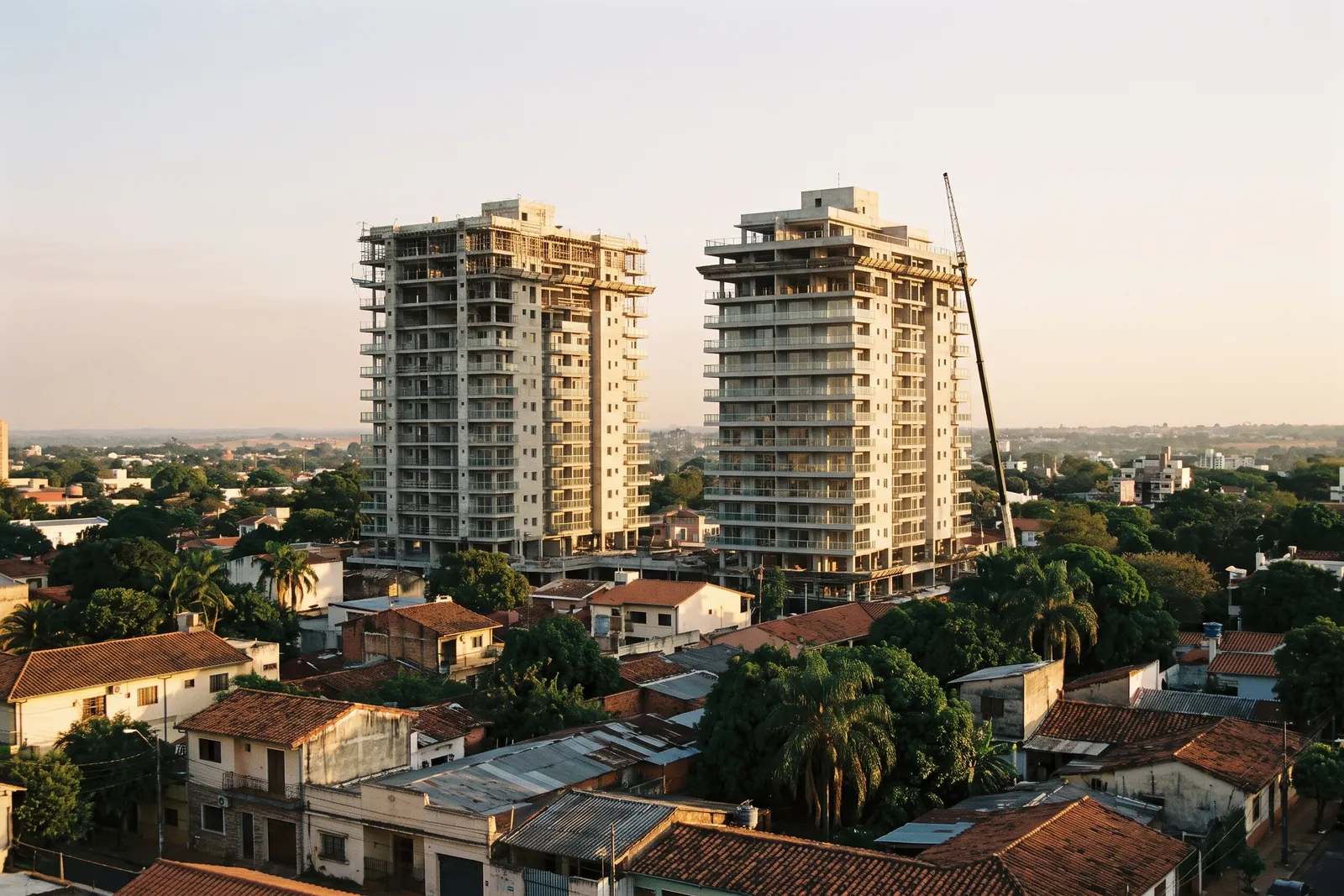
For most foreign buyers, the smart move is usually to get into a project that has just launched off-plan, for three reasons:
- Launch pricing. Early-stage units often sell around 30 percent below the finished market price, so the appreciation is largely built in by delivery.
- Payment facilities. Developers spread the payments across the construction period instead of asking for the full amount up front.
- Standards. New builds come with better finishes and specifications than most of the second-hand stock on the market today.
The historic center is the contrarian bet. Right now it is somewhat run-down, but every sign points to a major investment push around Asunción's 500th anniversary in 2037: a revitalized, modernized center is the likely direction. Buying there today is risky, but it could turn into a big winning gamble if that renewal lands.
A worked example
A 60 m2 two-bedroom bought off-plan in a central area at 1,800 USD per m2, then valued at 2,100 per m2 once the building is delivered:
| Line | Amount (USD) |
|---|---|
| Off-plan price (60 m2 at 1,800) | 108,000 |
| Notary fees (~3%) | 3,240 |
| All-in entry cost | ~111,240 |
| Estimated value once finished (60 m2 at 2,100) | 126,000 |
| Estimated capital gain | ~14,760 |
The gain is on paper until you sell, and delivery takes time, but it shows why getting in early in the cycle is the common play here.
What it can earn
Once delivered, that same central two-bedroom can be rented three different ways. Rough gross figures, from current Asunción listings and short-term data:
- Long-term, unfurnished: around 800 USD a month. The simplest option, lowest effort, longest tenancies.
- Long-term, furnished: roughly 900 to 1,100 USD a month. Foreign arrivals actively look for furnished units, which supports the premium.
- Short-term (Airbnb): the equivalent of about 1,200 to 1,650 USD a month gross in a central zone. Cleaning, management and vacancy eat into that, so the net lands closer to the furnished long-term figure.
Even on the conservative end, the gross yield sits in a range most Western capitals stopped offering decades ago. For the rental market in detail, see rent prices in Asunción.
Keeping the numbers honest
Two habits protect every buyer. First, never take a per-m2 price at face value: confirm what is included (parking, storage, building fees) before you compare. Second, the developer matters more than any single listing: a proven track record on delivery and finishes is what protects your money, so lean on the buying property in Paraguay guide for the steps. For the wider market picture, start with the real estate in Paraguay overview.