
Grocery and Food Prices in Paraguay
Contents
Grocery and food prices in Paraguay follow one simple rule: if it grows or grazes here, it is cheap; if it arrives in a container, it is not. Learn that rule and a food budget in Asuncion becomes one of the smallest lines in your monthly costs. Ignore it and you can spend Madrid money at the supermarket without noticing how.
The pattern behind grocery prices in Paraguay
Paraguay is an agricultural country. Beef, corn, cassava (mandioca), soy and a long list of fruits and vegetables are produced locally at scale, so the everyday basics cost little. The flip side: Paraguay is landlocked and imports almost everything processed or foreign, and those import costs land on the shelf price. The same shopping cart can be modest or eye-watering depending on which half of the store you fill it from.
A sample basket, in USD
Prices are rounded and move with the guarani exchange rate, but the ratios hold.
| Item | Typical price (USD) |
|---|---|
| Tomatoes, 1 kg (market) | 1 to 1.50 |
| Bananas, 1 kg | around 1 |
| Good beef cut, 1 kg | 4 to 7 |
| Chicken, whole, 1 kg | 2 to 3 |
| Eggs, dozen | 2 to 2.50 |
| Milk, 1 liter | around 1 |
| Rice, 1 kg | around 1 |
| Queso Paraguay (local cheese), 500 g | 3 to 4 |
| Olive oil, 1 liter (imported) | 8 to 12 |
| Branded breakfast cereal (imported) | 5 to 7 |
The last two rows are the warning. An imported product routinely costs two to three times its local equivalent, and sometimes more than it would in the country it came from.
Markets vs supermarkets
Asuncion runs on both, and most residents end up using both.
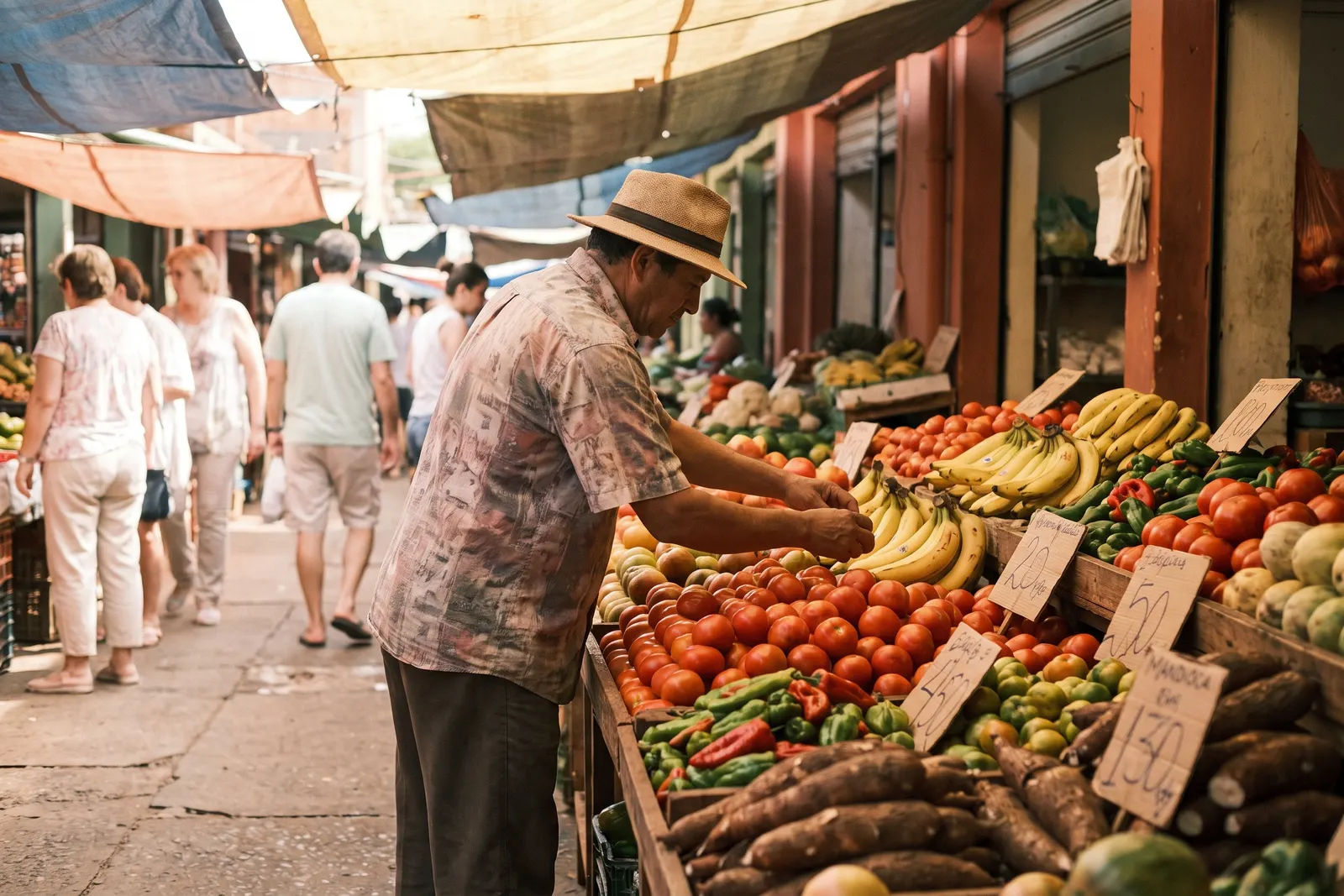
- Street markets such as Mercado 4 and the wholesale Mercado de Abasto are the cheap end: fruit, vegetables, herbs and meat at prices supermarkets do not try to match, often 30 to 50 percent lower. Quality is good if you pick with your eyes open, and vendors expect a little friendly back and forth.
- Supermarkets like Superseis, Stock and Casa Rica cover everything else: consistent quality, air conditioning, card payments and the imported aisle. Casa Rica leans upmarket with a wide foreign selection; Biggie convenience stores fill the gaps on every other corner.
A workable rhythm: produce and meat from the market once a week, everything else from the supermarket. That single habit cuts a food budget by a noticeable margin.
What surprises newcomers
Beef is the famous one. Paraguay exports beef worldwide, and locally a quality cut costs what mince costs in Europe, which is why the Sunday asado is a national institution rather than a splurge. Fruit prices swing hard with the seasons: mangoes in December are near free, sometimes literally falling off the trees, while the same fruit off-season costs real money. And the disappointments are just as consistent: wine, salmon and European cheese are priced as the small luxuries they are here.
What it means for your monthly budget
Cooking mostly local ingredients, a single person typically lands between 200 and 300 USD a month on groceries; the figure we use in the monthly budget for Asuncion is 260 USD, with a couple around 430. Lean on imported brands for half your cart and those numbers climb fast, which is the same dynamic that runs through all prices in Paraguay: the country is cheap when you live even slightly locally, as the reality check on living costs here spells out.
Eating out follows the same logic, by the way. A generous lunch menu at a local spot costs a few dollars, so on busy weeks the market-plus-almuerzo combination keeps both your time and your budget intact.